Reverse lunges are a lower-body exercise that targets the glutes, quadriceps, and hamstrings while placing less stress on the knees than traditional forward lunges. The move is suitable for beginners and can be done with or without added weight.
How to do reverse lunges
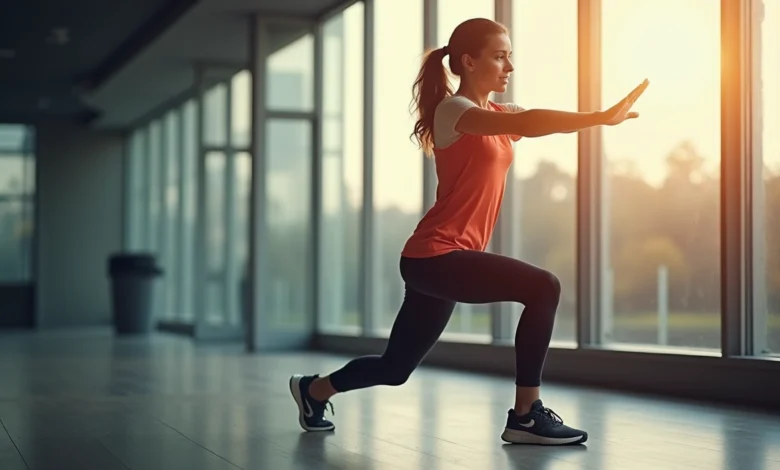
To perform a reverse lunge, a person starts standing. They may hold a weight in one hand. The exerciser steps one leg back, hinges at the hips, and bends both knees to lower the body. They hold the position for three seconds, then push back up to the starting position. That counts as one repetition. The weight, if used, is held in the hand on the same side as the back leg.
Tips and modifications
For those new to the exercise, the weight can be omitted and the hands can stay on the hips. Keeping the hips square throughout the movement helps target the muscles correctly. Engaging the core for the entire rep is recommended. To coordinate breath, the exerciser should exhale while stepping back and lowering the knee, then inhale while returning to standing.
Benefits of reverse lunges
Compared with a classic forward lunge, which works the quadriceps more, the reverse lunge challenges the glutes to a greater degree. Certified personal trainer BB Arrington, CPT, noted that the move provides a good stretch in the glutes while the quadriceps and hamstrings assist. The variation also reduces strain on the knees, which is helpful for people with knee issues. When weights are added and the core is engaged, the exercise becomes a full-body movement that also targets the arms and abdominal muscles. Because the movement involves stepping back on one foot, balance is required.
A related read on the same topic notes that women use this exercise to help build lean muscle. The reverse lunge is a simple addition to leg day or a full-body workout, and consistent practice can lead to noticeable strength gains.